Why Your Yard Holds Water After Rain (And How to Fix It)
Common causes of standing water and real solutions for homes in the Cleveland area
If your yard turns into a muddy mess every time it rains, you’re definitely not the only one around Cleveland, Tennessee dealing with it.
Standing water isn’t just annoying—it can kill your grass, wash out your yard, and over time even start causing issues near your home.
Most of the time, it’s not random. There’s always a reason it’s happening.
⸻
Why Your Yard Holds Water
Here’s what we usually run into on properties around Cleveland, Tennessee:
1. The yard doesn’t have the right slope
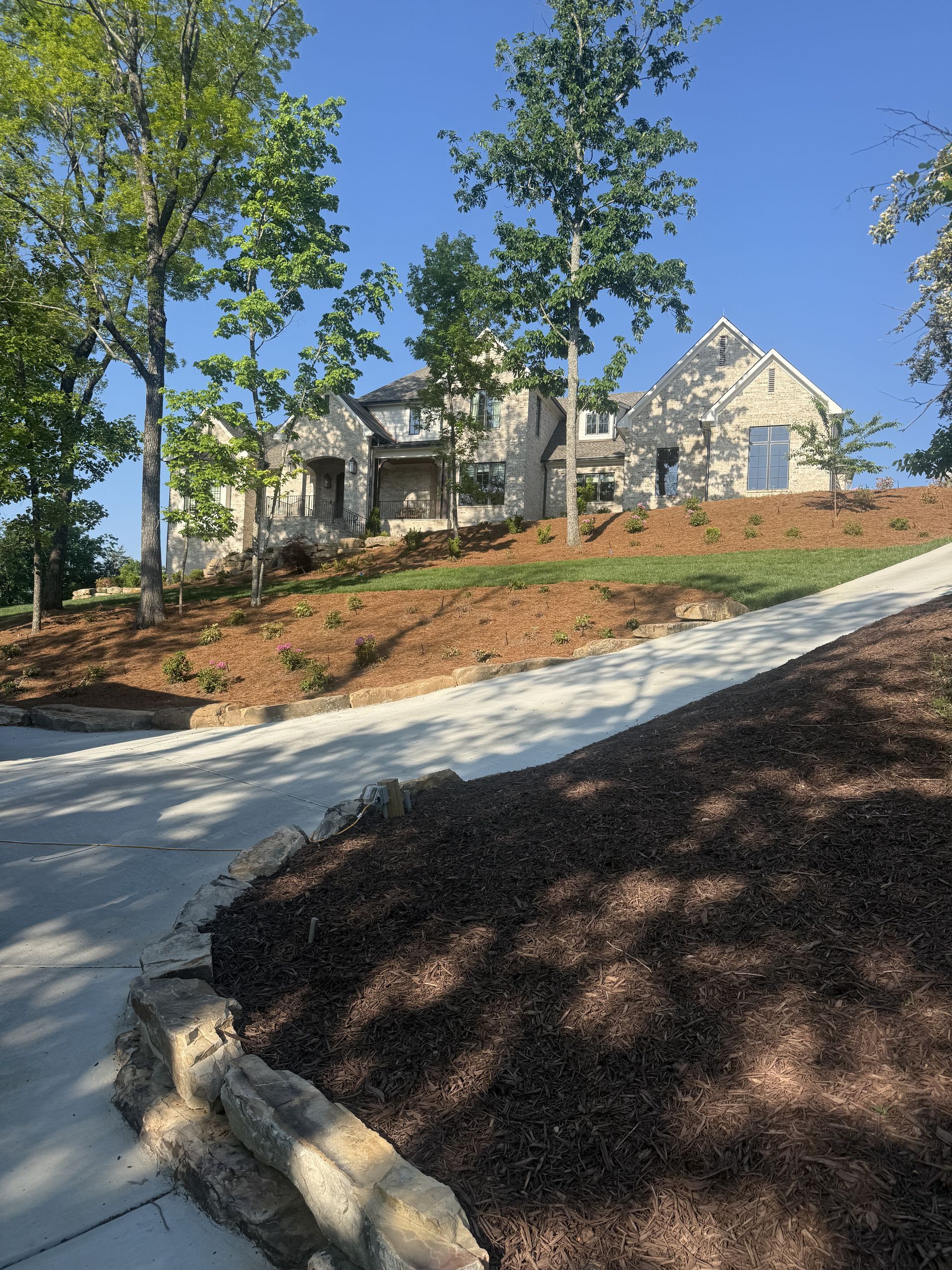
If water doesn’t have somewhere to go, it just sits. A lot of yards are either too flat or pitched the wrong direction.
2. Heavy clay soil
Soil in this area tends to hold water instead of soaking it up, so after a good rain it sticks around longer than it should.
3. Low spots in the yard
Even small dips can turn into standing water after storms in Cleveland and surrounding areas.
4. Downspouts dumping in one area
If all your gutter water is hitting the same spot, it will eventually stay soggy and start washing out.
5. Compacted soil
Years of mowing and traffic pack the ground down so hard that water can’t soak in properly.
⸻
Signs You’ve Got a Drainage Problem
If you’re seeing any of this in your yard, it’s time to address it:
Water sitting for hours (or days) after rain
Constant muddy areas
Grass thinning out or dying in spots
Erosion or washouts starting to form
Water pooling near the house
⸻
How to Fix Yard Drainage (What Actually Works)
There’s no one-size-fits-all fix, but these are the most common solutions we use in Cleveland, Tennessee:
1. Regrading the yard
Sometimes the yard just needs to be reshaped so water flows the right direction instead of sitting.
Best for: larger areas with general pooling
⸻
2. French drains
An underground pipe system that collects water and moves it away from problem areas.
Best for: wet spots that never dry or areas near the home
⸻
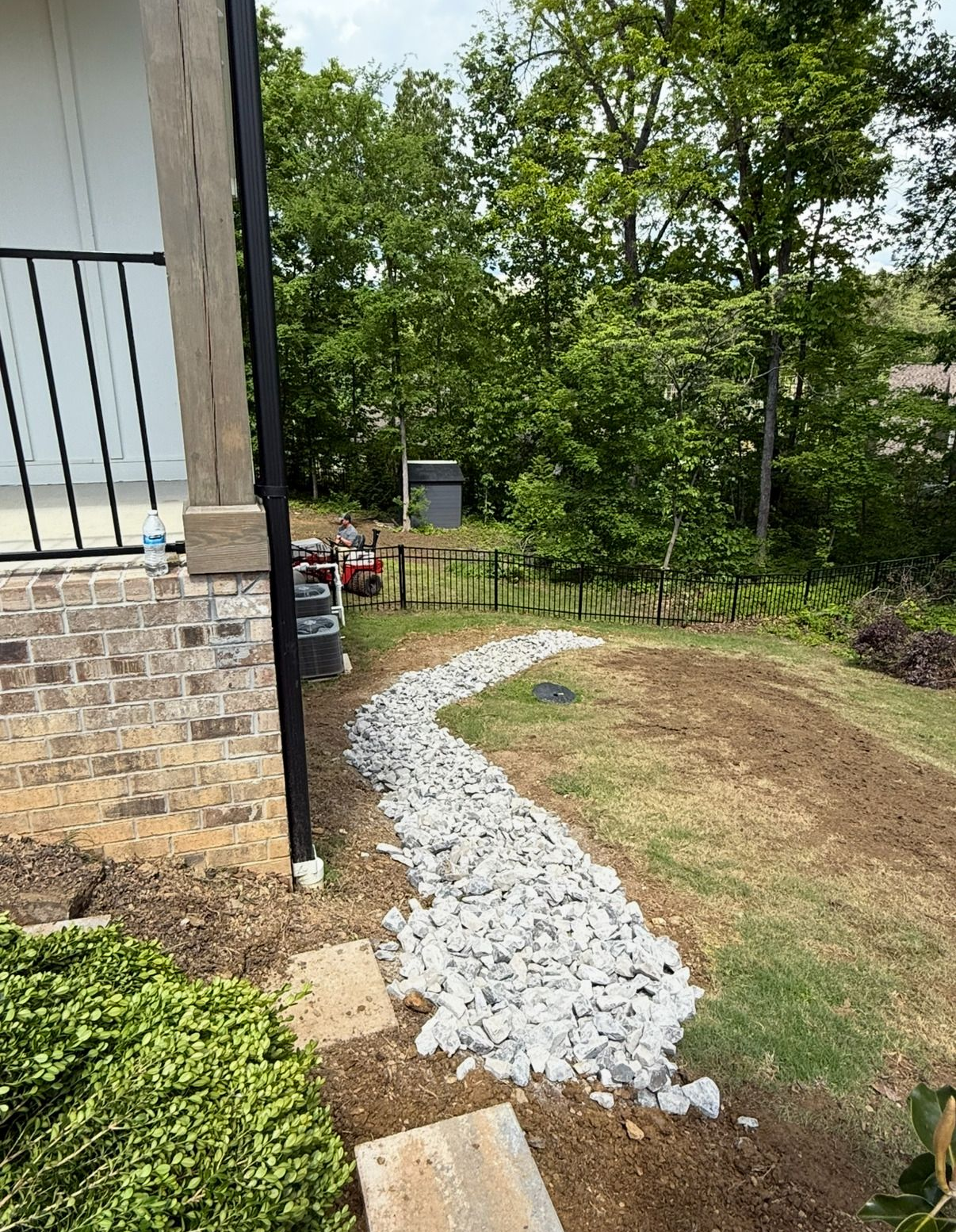
3. Rip rap drainage
Rock is used to control water flow and prevent erosion while giving water a clear path out.
Best for: slopes or heavy runoff areas
⸻
4. Downspout extensions
Sometimes it’s as simple as moving gutter water farther away from the house.
Best for: localized issues around the home
⸻
5. Leveling low spots
Filling in dips and uneven areas can fix smaller pooling issues fast.
Best for: small standing water spots
⸻
What Happens If You Don’t Fix It
Drainage problems don’t stay the same—they usually get worse over time:
Grass continues to die off
Erosion gets worse every storm
Yard stays soft and muddy
Can eventually start affecting the home area
⸻
What We See Most in Cleveland, Tennessee
Most yards around here don’t need anything extreme. It usually comes down to:
Adjusting the slope slightly
Giving water a clear path to exit
Fixing a few problem spots
Once that’s corrected, the yard usually starts drying out and holding up a lot better.
⸻
Need Help With Drainage?
At Stripes and Edges, we handle drainage problems all the time around Cleveland, Tennessee—from small wet spots to full yard corrections.
If your yard is holding water, we can:
Figure out exactly what’s causing it
Recommend the right fix (not just the most expensive one)
Get it handled the right way so it doesn’t keep coming back
If you’re dealing with standing water or a muddy yard, give us a call and we’ll take a look.